Hospital Queue Management System: 7 Ways It Cuts Patient Wait Times in 2026
Few things frustrate patients more than a crowded waiting room with no sense of order. A modern queue management system solves that problem by turning chaotic lines into a measurable, digital flow that both staff and visitors can trust. In healthcare especially, where anxiety is already high, the difference between a calm clinic and an overwhelmed one often comes down to how patients are routed, called, and informed. This guide explains how smart queuing works in hospitals and why so many facilities are upgrading in 2026.
Having spent years helping clinics deploy patient-flow technology, I have watched a single ticketing kiosk transform a frantic registration desk into a steady, predictable operation. The lessons below come from real deployments, not brochures.
Why a Queue Management System Matters in Healthcare
Hospitals juggle competing priorities every hour: emergency cases, scheduled consultations, lab draws, pharmacy pickups, and billing. Without a central system, each department becomes its own bottleneck. A digital queue acts as an air-traffic controller, directing patients to the right counter at the right moment.
The payoff is not only comfort. Shorter, fairer waits reduce walkaways, improve clinical throughput, and lift patient-satisfaction scores that increasingly drive hospital funding. According to the World Health Organization, patient experience and timely access are core pillars of healthcare quality, and waiting time is one of the most cited complaints worldwide.
From Paper Tokens to Intelligent Routing
Early systems simply printed a number. Today’s platforms predict demand, balance staff loads, and send SMS alerts so patients can wait in their car or the cafeteria instead of a packed hall. That shift matters in regional healthcare hubs; providers rolling out a queue management system in saudi arabia report measurable drops in perceived wait time once mobile notifications replace crowded seating areas.
7 Ways a Queue Management System Cuts Patient Wait Times
- Self-service check-in kiosks remove the front-desk logjam and let patients register in under a minute.
- Priority rules automatically bump urgent or elderly patients ahead without staff negotiating case by case.
- Multi-counter balancing routes the next patient to whichever clerk is free, instead of fixed lines.
- SMS and app notifications free waiting rooms and reduce no-shows for the next appointment slot.
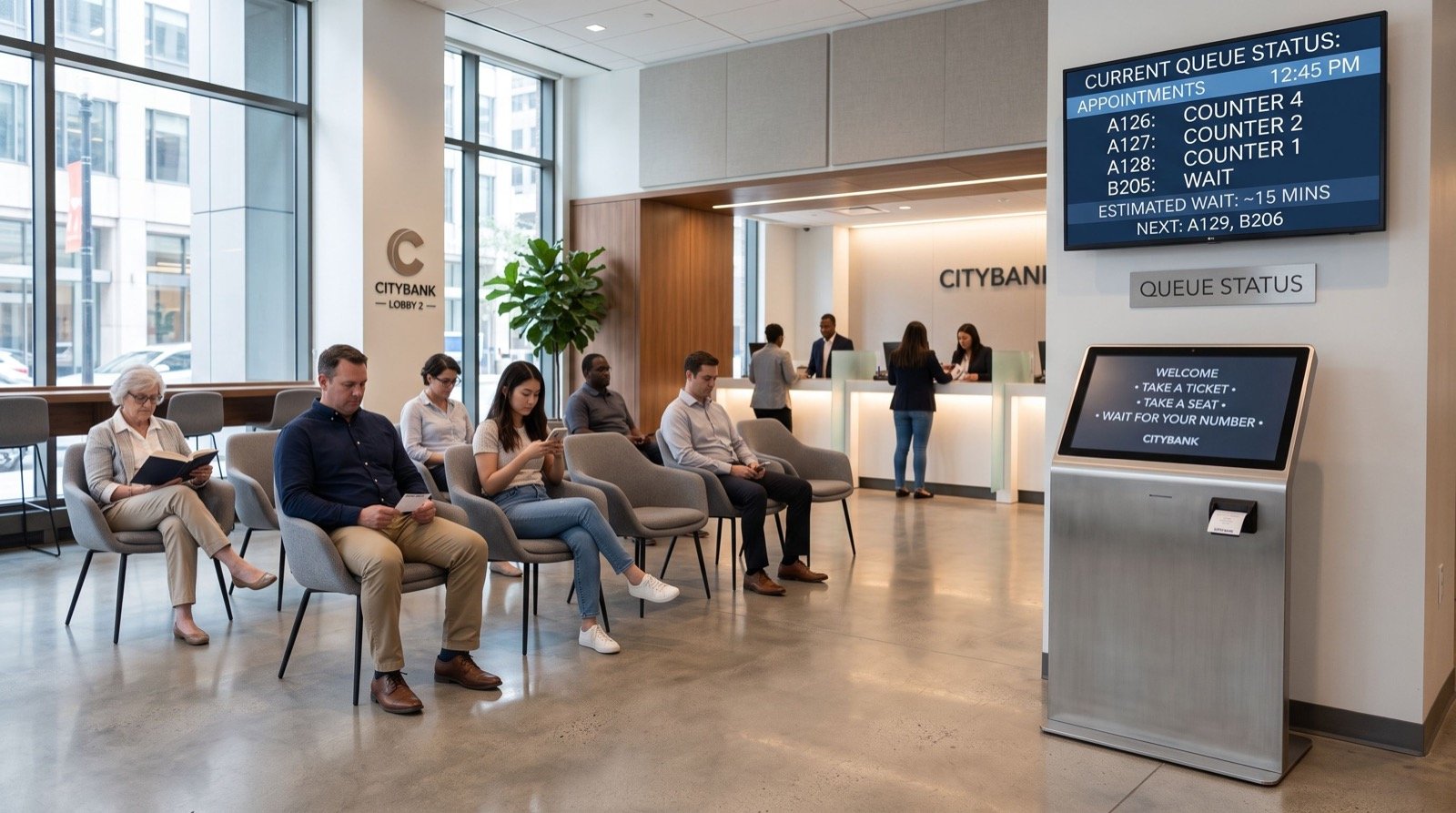
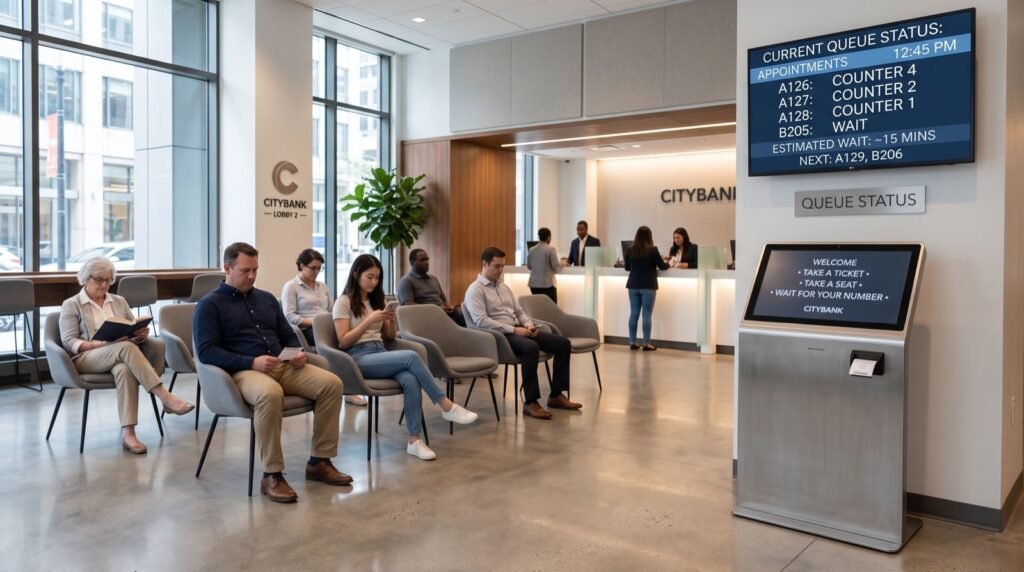
- Digital signage displays live token numbers so no one misses a call.
- Appointment integration blends pre-booked and walk-in patients into one fair sequence.
- Real-time dashboards let supervisors open extra counters the moment a surge begins.
Deployed together, these features routinely trim average waits by 30 to 50 percent in outpatient departments, which is why demand for a reliable queue management system in karachi has grown so quickly across South Asian hospitals facing high daily volumes.
Key Components and How They Fit Together
A complete solution blends hardware and software. The kiosk or mobile ticket is only the visible tip; the real value sits in the analytics engine that learns your patient patterns.
| Component | Role | Impact on Wait Time |
|---|---|---|
| Check-in kiosk / QR ticket | Captures patient and service type | Removes registration queue |
| Central queue engine | Routes and prioritizes tokens | Balances load across counters |
| Digital signage + voice call | Announces next patient | Cuts missed calls and confusion |
| SMS / mobile alerts | Virtual waiting | Frees seating, lowers crowding |
| Analytics dashboard | Monitors KPIs live | Enables proactive staffing |
What Should Hospitals Measure First?
Start with three metrics: average waiting time, average service time, and abandonment rate. Together they reveal whether your bottleneck is too few counters, slow service, or patients giving up before being seen. Tracking these weekly turns a vague complaint into a fixable number.
Implementation Tips From Real Deployments
Technology alone never fixes flow. The best rollouts pair software with a short staff-training sprint and clear floor signage. Here are practices that consistently work:
- Pilot one department, usually outpatient, before expanding hospital-wide.
- Keep the ticket categories simple; five clear options beat twenty confusing ones.
- Place the kiosk where patients naturally enter, not around a corner.
- Use bilingual prompts so every visitor understands the flow.
- Review analytics monthly and adjust priority rules with clinical staff.
One original tip that rarely appears in vendor decks: assign a “flow champion” nurse or clerk per shift. This single accountable person watching the live dashboard prevents the small stalls that compound into long afternoon backlogs. If you need help choosing partners for setup and support, our directory of dependable specialists is a useful starting point.
Cost, ROI, and the 2026 Outlook
Modern cloud-based queuing has lowered the entry price dramatically. A mid-sized clinic can launch for a modest monthly subscription rather than a heavy capital purchase. The return shows up fast through higher daily patient capacity and fewer staff hours lost to crowd control.
In 2026, the biggest trend is AI-assisted forecasting. Systems now predict Monday-morning surges and recommend staffing before the rush, rather than reacting to it. Integration with electronic health records is also tightening, so a patient’s token can carry context straight to the clinician’s screen.
Common Mistakes Hospitals Should Avoid
Even strong technology fails when deployed carelessly. The most common error I see is launching across every department at once, which overwhelms staff and buries early problems under sheer scale. A focused pilot surfaces issues while they are still cheap to fix.
Another frequent misstep is ignoring the human handoff. A kiosk that issues a token but leaves patients unsure where to sit or when they will be called simply moves the confusion rather than removing it. Clear signage, audible calls, and a visible greeter during the first weeks make all the difference between adoption and quiet abandonment of the new system.
Frequently Asked Questions
How long does it take to install a hospital queue management system?
A single-department pilot can go live in one to two weeks. A full multi-department rollout, including signage and EHR integration, typically takes four to eight weeks depending on facility size.
Can patients wait outside the hospital with a digital queue?
Yes. Virtual queuing sends an SMS or app notification as the patient’s turn approaches, so they can wait in their car, a cafe, or the pharmacy and arrive just in time.
Does a queue management system work for small clinics too?
Absolutely. Cloud subscriptions scale down to single-doctor practices, and even a basic ticketing kiosk with SMS alerts noticeably improves flow and reduces front-desk pressure.
Is it difficult for older patients to use?
Well-designed systems keep the interface to one or two taps and offer staff-assisted check-in, so elderly or less tech-comfortable patients are never left behind.
Conclusion
A well-chosen queue management system is no longer a luxury for hospitals; in 2026 it is a core part of delivering timely, dignified care. By combining kiosks, smart routing, virtual waiting, and live analytics, facilities cut wait times, raise satisfaction, and serve more patients with the same staff. If reducing crowded waiting rooms is on your agenda this year, now is the time to evaluate a solution and request a demo tailored to your patient volumes.